Radiology
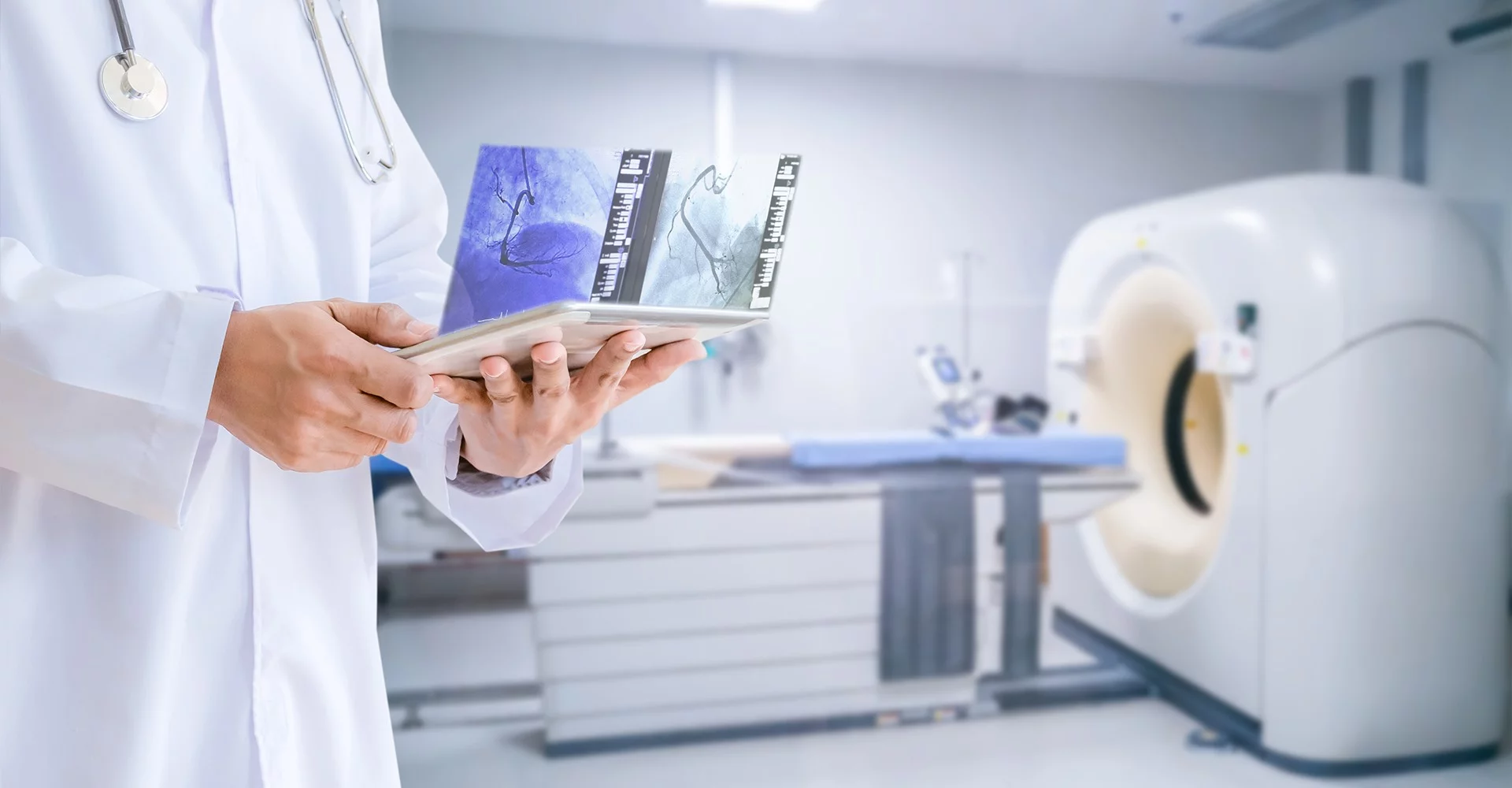
Training and health service studies in this field are given with; 1.5 T MR, multislice computed tomography, digital angiography, digital mammography, tomosynthesis, color doppler ultrasound, digital x-ray, digital fluoroscopy, bone densitometry. Studies in the field of neuroradiology are mostly provided by MR of brain, spinal canal, vertebrae and peripheral nerves, multi slice CT, digital X-ray and in necessary cases complementary examinations are performed with color-doppler ultrasonography and angiography devices. In body imaging; lungs, intra-abdominal organs, muscle skeletal system, heart and vascular structures are detected with multi slice tomography, MR, color Doppler ultrasonography, digital X-ray, sometimes with digital fluoroscopy and angiography devices and diagnosis and treatment planning is carried out.
Interventional Radiology is a branch of radiology that provides the diagnosis of disease and treatment without surgery with the guidance of the modern technology imaging equipments, by entering with a needle from the few millimeters of holes and by using milimetric materials and reaching to the diseased area. Interventional radiology procedures are alternative procedures to surgery, however completely different materials and methods from surgery are used. Wires and catheters, balloons, stents, therapeutic drugs, laser that the sizes are getting smaller day by day are being used instead of scalpel and stures, with developing technology and increasing usage. Many vascular and non-vascular interventions are performed in the department. Both diagnostic and treatment procedures are performed in all vascular problems except heart (narrowing, obstruction, abnormal vascularity, aneurysm, bleeding, varicosities, some tumors, dialysis fistulas…). These procedures are generally carried out in angiography unit under local anesthesia. Although the interventions last for one-two hours generally, it can exceed to three hours according to the invasion of the disease and vascular structure. For most of these procedures, a one night of hospitalization is required after the intervention. The procedures of taking biopsy from almost all organs and masses, drainage of body fluids and abscesses, treatment of cysts, cauterization of the tumors with needle, the opening of urinary tract and bile duct obstructions generally do not require hospitalization and performed within 30 minutes and 1 hour.
Studies for early diagnosis and treatment planning of breast diseases, especially breast cancer are carried out in breast imaging unit with digital mammography-tomosynthesis and color Doppler ultrasound devices. In necessary cases breast MR is applied for advanced imaging testing and in some cases biopsies are taken with the guidance of ultrasonography or mammography.