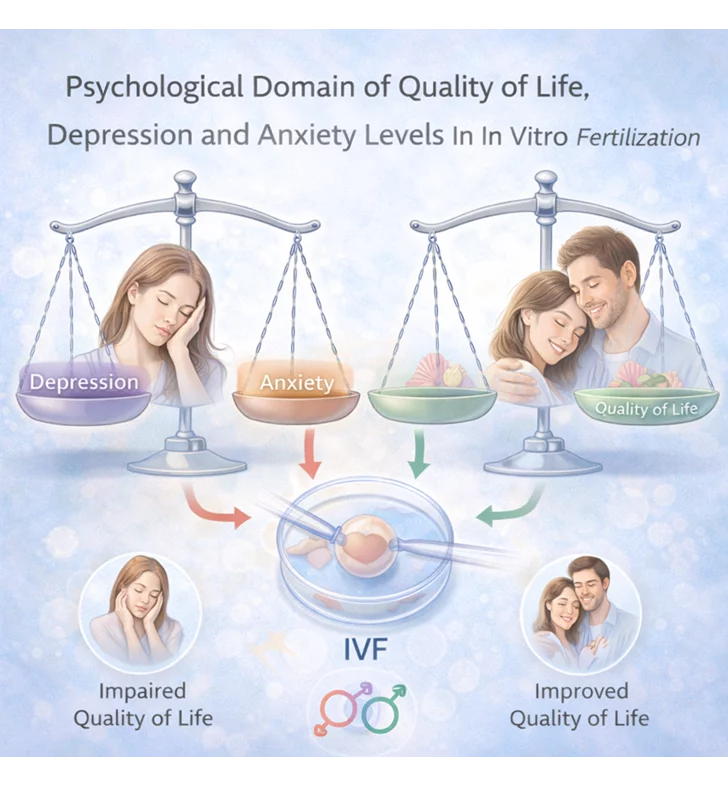
Psychological domain of quality of life, depression and anxiety levels in in vitro fertilization
Psychological domain of
quality of life, depression and anxiety levels in in vitro fertilization/intracytoplasmic
sperm injection cycles of women with endometriosis: a prospective study
Assoc.Prof.Dr.Mehmet Ufuk
Ceran 1, N Yilmaz 2, E N Ugurlu 3, N Erkal 4, A S Ozgu-Erdinc 2, Y Tasci 2, H C
Gulerman 2, Y Engin-Ustun 5
Abstract
Objective
To evaluate the psychological domain of quality
of life (PDQoL), anxiety and depression levels of infertile women with
endometriosis versus non endometriosis who applied for Assisted Reproductive
Technologies (ART).
Method
This prospective case–control study compromised
a total of 105 women who applied for IVF/ICSI program. Ninety-three women were
divided into two groups as endometriosis (n = 37) and non-endometriosis
(n = 56) after 12 patients who refused to participate in the study were
excluded. The WHOQOL-BREF questionnaire, Beck Depression and Anxiety Inventory
scales were used to determine the psychological stress levels.
Results
A significant difference was found between the
endometriosis and non-endometriosis groups regarding depression scores, while
no significant difference was reported with respect to PDQoL and anxiety (p < 0.01, p = 0.897
and p = 0.058, respectively). A weak but significant correlation
was observed between depression and endometriosis (CC: 0.435, p < 0.01).
Though anxiety scores were found to be higher in endometriosis group this can
not reach statistical significance (p = 0.058). Impact of PDQoL,
depression and anxiety scores on pregnancy outcomes were found to be
insignificant.
Conclusion
Women with endometriosis seem to be more susceptible to
depression and anxiety than women without endometriosis. Although infertility
treatment outcomes are not found to be significantly affected, the impact of
depression and anxiety over ART treatment success merit further research.
Introduction
Endometriosis is an estrogen-dependent, chronic
inflammatory and generally progressive disease that occurs in 10–15% of the
reproductive age group. It is considered to be one of the main causes of female
infertility . The pathogenesis of the disease remains elusive despite many
theories proposed. Endometriosis can present with a wide range of symptoms such
as menstrual irregularities, dysmenorrhea, chronic pelvic pain, dyspareunia,
subfertility and infertility.
Many studies had reported decreased quality of
life domains including all aspects, mainly psychological domain (PDQoL) and
higher depression and anxiety scores. Depression and anxiety may occur more
frequently in women with endometriosis by virtue of the possible consequences
of the disease, especially chronic pelvic pain and infertility .When chronic
pelvic pain complicated the disease, the depression and anxiety were found to
be amplified and significant reduction in the quality of life indexmainly
physical domain and PDQoL was observed. Neuroinflammation and autoimmunity
dysregulation may account for the depression and anxiety as well. Physical and
psychological suffering from these adverse effects may lead to deterioration of
all aspects of life including personal, professional and sexual life. There
could also be some shared familial risk factors that make these women more
prone to both endometriosis and mood disorders. Another possible cause of
anxiety and depression may be medications used in the treatment of
endometriosis. Gonadotropin-releasing hormone (GnRH) agonists emotional
lability and depression possibly due to estrogen withdrawal effects which could
trigger mood disorders via reduced neurotransmitter activity.
Oral contraceptives and progestational medications are also reported to be
associated with depression, but evidence is limited. Since the diagnosis of
endometriosis is challenging, delays occur in diagnosisand treatment possibly
contributing to disease progression and emotional impairment.
There is a well-known association between
infertility and endometriosis. Adverse effects of endometriosis on fertility
may disrupt women’s emotional well-being leading to depression, anxiety, sense
of inadequacy and consequently reduced quality of life. Considering that 50% of
infertile women have endometriosis, it may be surprising the studies
investigating the psychological experience of these women are so few. It has to
be emphasized that besides from endometriosis presence, infertility per se has
great adverse effects on couples’ psychological well-being. Women face
additional psychological pressure when confronted with infertility treatments.
Exposure to stress and anxiety is inevitable due to the invasive procedures
such as oocyte retrieval, as well as prolonged use of specific medications
along with their adverse effects. Imprecise results, recurrent failed IVF
cycles and prolongation of infertility may exacerbate anxiety and stress
symtoms preparing the ground for depression. Moreover, emotional impairment has
adverse effects on IVF treatment outcomes forming a vicious circle.
The primary aim of this study was to assess
whether endometriosis in IVF patients had any adverse impact on psychological
wellbeing (PDQoL, depression and anxiety levels). The secondary aim was to
examine if PDQoL, depression and anxiety had any effect upon IVF outcome.
Material
and methods
Study
design
The study was designed prospectively and conducted at Dr. Zekai
Tahir Burak Education and Research Hospital. Local Ethics Committee approved
the study, and written informed consents were obtained from the participants. A
two-tails power analysis of two independent groups using the G Power computer
program was performed and a total sample number of 70 was obtained to be necessary
to detect large effects using chi-square with % 90 power. Although previously
agreed to participate, after completing questionnares, 12 women gave up
participitating without any excuse. Ninety-three participants of 105 women
applied for between September 2017 and June 2018 were included.
Inclusion
and exclusion criterias
Women between the ages of 21–45 were included.
IVF indications were male factor, reduced ovarian reserve, tubal factor and
unexplained infertility. Before beginning treatment, all women were evaluated
thorougly by Health Council comprising of gynecologist, internal medicine
specialist and psychiatrist. Exlusion criteria were; women with uncontrolled
hypertension and diabetes, thyroid disorders, neurological disorders,
malignancy, major psychiatric disturbaces; including major depression, bipolar
disease and psychotic abnormalities.
Diagnosis of endometriosis was done eitherwith
laparoscopy, MRI or USG. Endometrioma was detected in 19 patients by
transvaginal ultrasound and MRI. In addition, 18 endometriosis patients were
diagnosed with laparoscopy. Women with endometriosis of all stages were
included. There were 37 women in study (endometriosis) group and 56 women in
control (non-endometriosis) group. In addition to the absence of symptoms of
endometriosis (dysmenorrhea, pelvic pain, dyspareunia), patients with normal
pelvic examination and ultrasound findings were included in the control group.
Data
collection
Women’ age, body mass index (BMI), the presence
of endometriosis, baseline characteristics including follicle-stimulating
hormone (FSH), antral follicle count (AFC), and estradiol (E2) levels were
recorded. Women were monitored and gonadotropin doses were adjusted according
to serially performed transvaginal ultrasonography (USG) and E2 measurements.
Antagonist protocol was applied to all women along with fresh embryo transfer.
Stimulation parameters, follicle count before oocyte pick-up (OPU) and MII
oocyte after OPU, numbers of obtained embryos, and clinical pregnancy results were
recorded. Clinical pregnancy was determined by the presence of at least one
gestational sac, documented with transvaginal USG two weeks after a positive
pregnancy test. All data were analyzed and compared between two groups.
Questionnaires
At beginning IVF treatment (first day of
controlled ovarian hyperstimulation, generally on second or third day of
menstruation), women were requested to fill three different questionnaires in a
quiet room in the clinic.
Beck
Depression Inventory-Turkish (BDI-II-TR)
The BDI-II is a self-report inventory
consisting of 21 items, designed to assess depressive symptomsas specified in
the DSM-IV. Each item is rated on a 4-point scale ranging from 0 to 3. The
total score ranges from 0 to 63, with higher scores indicating more severe
depressive symptoms. According to our country-specific cut off values, a total
score of 0–12 is considered as minimal level of depression, 13–18 as mild,
19–28 as moderate and 29–63 as severe depression.
Beck
Anxiety Inventory (BAI)
BAI is a self report inventory consisting of 21
items, designed to assess level of anxiety symptoms. It measures physical,
emotional and cognitive aspects of anxiety and fear of losing control. It was
shown to be applicable for Turkish population by Ulusoy et al. Each item
is rated on a 4-point scale ranging from 0 (not at all) to 3 (severely
bothered). The total score ranges from 0 to 63. Higher scores represent a
higher intensity level of anxiousness. A total score of 0–7 is interpreted as a
minimal level of anxiety, 8–15 as mild, 16–25 as moderate and 26–63 as severe
level of anxiety.
The
World Health Organization Quality of Life Short Form Turkish version
(WHOQOL-BREF-TR) questionnaire
The World Health Organization Quality of Life
(WHOQOL) is a scale composed of different domains to assess quality of life.
This instrument is adapted for different cultures. WHOQOL-BREF is shorter
version of original instrument. We used the WHOQOL-BREF-TR specific for Turkey,
which was validated by studies . WHOQOL-BREF-TR is composed of 26 items about
different aspects of life. These items are related with the following domains;
physical (7 items), psychological (6 itemes), environment (8 items), social
relationships (3 items) and overall (2 items). The quality of life score cannot
be defined by adding up the scores of all domains. All domains are assessed
seperately and they reflect different aspects of quality of life independently.
Scores range from 1 to 5 for each question. The raw score calculated for each
domain is converted into computerized scores ranging from 0 to 100. Higher
scores indicate better quality of life. There is no cut off value. Instrument
is designed to make comparisons.
Due to its relevance, psychological domain of
quality of life (PDQoL) was used in this study. This domain is related with
negative and positive feelings, self esteem, personel beliefs as well as
beliefs about religion and spirituality, thinking-learning-memory and
concentration. PDQoL scores were calculated according to answers to questions
5, 6, 7, 11, 19 and 26.
PDQoL scores were calculated as percentiles.
Depression and anxiety scales were categorized through the scores (minimal,
mild, moderate-severe).
Statistical
analysis
The Statistical Package for the Social Sciences
software package (SPSS version 25.0, IBM, United States, licensed by Baskent
University) was used. Lilliefords corrected Kolmogorov–Smirnov test and
Shapiro–Wilk tests were used to determine whether the data matched normal
distribution. To compare continuous variables of two independent groups, The
Mann–Whitney U-test was used. In comparing the categorical variables, Pearson’s
Chi-square test (with Fisher exact results) was used. Cramer’s V value for
Pearson’s Chi square test was calculated to assess effect size. The
Kruskal–Wallis H test was used to compare three independent groups. Correlation
measurements were tested using Spearman’s Rho test. Quantitative data are
expressed as median (minimum–maximum), categorical data are expressed as number
(n) and percentages (%). Data were analyzed at 95% confidence intervals (CI),
and a p value of <0.05 was considered statistically
significant.
Results
The median age of the women was 32 and 30 years
in the endometriosis and non-endometriosis groups, respectively (p = 0.501).
No statistically significant differences were observed between the both groups
in terms of BMI, duration of infertility, FSH, E2 levels, and ovulation
induction parameters. Total dose of gonadotropin used was significantly higher
in the endometriosis group than control group (p < 0.05). Number of
oocytes retrieved, MII oocyte counts, numbers of embryos obtained, and grade of
embryos were found to be comparible between endometriosis and non-endometriosis
groups. Number of positive pregnancy test was 26. There was no statistical
difference in clinical pregnancy rates between two groups (p = 0.21).
The PDQoL (Cronbach a coefficients = 0.81)
computerized domain scores were 75% and 77% for the endometriosis group and
non-endometriosis group, respectively; there was no statistical difference (p = 0.897)
In addition, there was no significant relationship between PDQoL and age, BMI,
duration of infertility, number of IVF/ICSI cylesand clinical pregnancy rates.
In this study, BDI-II-TR questionnaires showed
high consistency with Cronbach coefficients (0,84). In terms of depression
scores, moderate–severe depression scores were observed in 19 of 93 women (20%)
included in the study. Moderate–severe depression scores were found to be
statistically higher in endometriosis group than non-endometriosis group
(37.8%, 8.9%, respectively, p < 0.01, Cramer’s V = 0,436).
A weak but significant positive correlation was observed between depression
scores and endometriosis (CC: 0.435, p < 0.01). Gonadotropin
dose was higher in endometriosis group, but there was no significant
correlation between depression scores.
When the anxiety scores are examined according
to BAI questionnaires (Cronbach a coefficients = 0.77) 23 of 93 women (24%) had
moderate–severe anxiety scores. Although the result of the endometriosis group
was more than twice the non-endometriosis group, it was not statistically
significant (37.6%, 16.1%, respectively, p = 0.058).
There was no significant relationship between
depression and anxiety scores and other parameters (age, BMI, duration of
infertility, number of cycles, clinical pregnancy) (Table 2).
Discussion
The primary objective of this research was to
evaluate the effects of endometriosis on PDQoL, depressive and anxiety symptoms
in women undergoing IVF treatments. The secondary objective was to determine if
PDQoL scores, depression and anxiety had any impact upon IVF treatment and
pregnancy rates.
To our knowledge, this is the first prospective
study which evaluated anxiety, depression and PDQoL scales in infertile women
with endometriosis receiving IVF treatment.
In this study, depression scores in women with
endometriosis were found to be significantly higher than non-endometriosis
group, while PDQoL scores and anxiety scores were found to be comparable. We
also observed that this relationship was not particularly influenced by
variables such as age, duration of infertility and number of cycles. Although statistically
insignificant, it has to be highlighted that anxiety scores in women with
endometriosis were found to be more than twice the women with
non-endometriosis. There is a clear tendency for women with endometriosis to
have anxiety and this finding may have clinical importance. Anxiety levelsdid
not seem to be associated with age, BMI, duration of infertility, and number of
cycles. PDQoL, depression and anxiety scores were shown to have no significant
effect on duration of infertility, number of ART cycles, GND doses as well as
pregnancy rates. Nonetheless, we have to emphasize that despite being
statistically insignificant, number of positive clinical pregnancies in group
with minimal depression was 4 times more than severe depression group and nearly
three times more than mild depression group. Meanwhile, number of positive
clinical pregnancies was four times more in minimal anxiety group than mild
anxiety group and nearly three times more than severe anxiety group.
Consistent with our results, in many studies,
higher prevalance of depression and anxiety scores were reported among women
with endometriosis than non-endometriosis. Gao et al evaluated 854, 361
women with endometriosis regarding psychological disturbances and concluded
that these women were more prone to be have depressive, anxiety and stress
related disorders than women without endometriosis. In a review, it was stated
that women with endometriosis experienced higher rates of depression and
anxiety compared with women without endometriosis. They also emphasized that
despite lack of firm evidence, chronic pelvic pain seemed to be at the center
of emotional impairment, namely feelings of anxiety, hopelessness and
depression. They concluded by adding that the mechanisms underlying this association
needs to be clarified. In a metatalaysis, it was demonstrated that women with
endometriosis and associated pain experienced significantly higher depressive
symptoms than women with endometriosis but without pelvic pain. It was also
underlined that the rate of depressive symptoms among pain-free women with
endometriosis was comparable to women without endometriosis. The association
between endometriosis and depression may also be explained partly by
dysregulated immunological and inflamatory reactions. It was suggested that
over secretion of inflammatory cytokines might impair some brain areas
including cingulate cortex bringing about emotional disturbances, mainly
anxiety and depression.
Facchin et al. showed that women with
endometriosis accompanied by pelvic pain reported higher levels of anxiety and
depression as well as decreased quality of life than women without pelvic pain,
suggesting that pain was the determinant of psychological well-being. Lack of
awereness, the absence of non-invasive diagnostic methods along with
uncertainty regarding diagnosis, pathogenesis and treatment lead to diagnostic
delays and eventually depression and anxiety. Consequences of endometriosis,
especially chronic pelvic pain, infertility/subfertility and dyspareunia may cause
physical and emotional suffering and disturbances of personel and intimate
relationships inevitably ending up with depression and anxiety. Lack of
definitive treatment, along with side effects of medications used for treatment
may intensify these symptoms.
Regarding impact of endometriosis on
psychological aspect of quality of life, data in literature are conflicting. In
a recent study that searched for endometriosis effect over quality of
life via WHOQOL scale, the authors demonstrated that all
aspects of life including psychological aspect were adversely affected and they
recommended holistic treatment approach including psychological support. In
another study that assessed effects of endometriosis over quality of life
showed that consequences of endometriosis, especially chronic pelvic pain and
infertility, induced significant adverse effects over psychological and
physical aspects of QoL. In a study that compares women with endometriosis and
non-endometriosis controls in terms of psychological symptoms, it was noted
that women in endometriosis group had reduced mental health along with
increased anxiety and depressive symptoms. Tripoli et al compared three
groups of women regarding quality of life and emotional impairment. Group 1;
women with pain and endometriosis, group 2; women with non-endometriosis
related pelvic pain, group 3; healthy controls without disease. WHOQOL-BREF was
used and scores of all subscales especially psychological and physical domains
were found to be significantly decreased in groups 1 and 2 compared with group
3, whereas no remarkable difference was noted between group 1 and 2, suggesting
that pain was the determinant of QoL. In accordance with our results, Lagana
et al. demonstrated that while depression, anxiety and sensitivity are
higher in women with endometriosis than controls, no significant difference was
observedwith regard to psychological outlook subscale of QoL index.
In our current study, even though women with
endometriosis had been shown to experience more depressive symtoms than women
with nonendometriosis, the impact on PDQoL had been found to be insignificant.
This is in contrast with above-mentioned studies. This may be due to
differences between social and cultural status of the populations studied as
well as differences between patients’ adaptive mechanisms and coping
strategies. Data in literature regarding effects of depression and anxiety over
IVF treatment outcomes are scarce and inconsistent. Our findings are congruent
with the results of a metaanalysis consisting of 14 prospective studies which
showed that emotional distress, namely feeling of depression, tension and
anxiety before IVF treatment did not seem to affect pregnancy rates after a
single cycle of treatment. They claimed that IVF specialists may reassure
patients that emotional distress did not have significant impact over IVF
success. Inconsistent with our findings, some studies also reported no
association between depression and anxiety levels and pregnancy rates. As
opposed to our findings, in a study done among infertile women undergoing their
first IVF cycle, it was stated that women with depression or anxiety were 40%
less likely to conceive when compared to women without anxiety or depression.
In a large study done in Denmark including 42,880 women, it was reported that
women with a diagnosis of depression before ART treatments had decreased
pregnancy rates than healthy controls. More extensive researches should be
carried out to draw firm conclusions regarding effects of depression and anxiety
over IVF treatment outcomes. But based on our findings, we may speculate that
these emotional impairments do not have significant impact over IVF success.
We have some limitations of our study. The
distinction between primary and secondary infertility could be made and prior
obstetric hystory could be recorded. Pain is the most debilitating consequence
of this disorder but we did not perform pain scoring and other current
endometriosis sympytoms. Previous medical and surgical treatments for
endometriosis, duration of endometriıosis, stage of endometriosis were not
recorded. All women in our study received fresh antagonist IVF/ICSI cycles. In
this respect, future studies that include freeze-thaw cycles and GnRH agonist
cycles, which have been applied more frequently in recent years, will provide
more comprehensive results
Conclusion
Women with endometriosis seem to be susceptible
to emotional impairments, mainly depressive and anxiety symptoms. The
pathophysiology behind this association needs to be clarified and psychological
support should be implemented as a part of integrative treatment approach. The
potential effects of endometriosis on fertility brings about feelings of
desperation and inadequacy. Infertility per se and infertility treatments may
place a heavy psychological stress upon people. Although infertility treatment
outcomes are not demonstrated to be adversely affected, the impact of
depression and anxiety over IVF treatment success merit further research and
understanding. Before initiating IVF treatments, open discussion about
emotional stress, anxiety and depressive symtoms will help identify women
suffering from these disorders and alleviate their symptoms via different
strategies and regain their psycological health.
When the anxiety scores are examined according
to BAI questionnaires (Cronbach a coefficients = 0.77) 23 of 93 women (24%) had
moderate–severe anxiety scores. Although the result of the endometriosis group
was more than twice the non-endometriosis group, it was not statistically
significant (37.6%, 16.1%, respectively, p = 0.058).
There was no significant relationship between
depression and anxiety scores and other parameters (age, BMI, duration of
infertility, number of cycles, clinical pregnancy).
Discussion
The primary objective of this research was to
evaluate the effects of endometriosis on PDQoL, depressive and anxiety symptoms
in women undergoing IVF treatments. The secondary objective was to determine if
PDQoL scores, depression and anxiety had any impact upon IVF treatment and
pregnancy rates.
To our knowledge, this is the first prospective
study which evaluated anxiety, depression and PDQoL scales in infertile women
with endometriosis receiving IVF treatment.
In this study, depression scores in women with
endometriosis were found to be significantly higher than non-endometriosis
group, while PDQoL scores and anxiety scores were found to be comparable. We
also observed that this relationship was not particularly influenced by
variables such as age, duration of infertility and number of cycles. Although
statistically insignificant, it has to be highlighted that anxiety scores in
women with endometriosis were found to be more than twice the women with
non-endometriosis. There is a clear tendency for women with endometriosis to
have anxiety and this finding may have clinical importance. Anxiety levelsdid
not seem to be associated with age, BMI, duration of infertility, and number of
cycles. PDQoL, depression and anxiety scores were shown to have no significant
effect on duration of infertility, number of ART cycles, GND doses as well as
pregnancy rates. Nonetheless, we have to emphasize that despite being
statistically insignificant, number of positive clinical pregnancies in group
with minimal depression was 4 times more than severe depression group and
nearly three times more than mild depression group. Meanwhile, number of
positive clinical pregnancies was four times more in minimal anxiety group than
mild anxiety group and nearly three times more than severe anxiety group.
Consistent with our results, in many studies, higher
prevalance of depression and anxiety scores were reported among women with
endometriosis than non-endometriosis. Gao et al evaluated 854, 361 women
with endometriosis regarding psychological disturbances and concluded that
these women were more prone to be have depressive, anxiety and stress related
disorders than women without endometriosis. In a review, it was stated that
women with endometriosis experienced higher rates of depression and anxiety
compared with women without endometriosis. They also emphasized that despite
lack of firm evidence, chronic pelvic pain seemed to be at the center of
emotional impairment, namely feelings of anxiety, hopelessness and depression.
They concluded by adding that the mechanisms underlying this association needs to
be clarified. In a metatalaysis, it was demonstrated that women with
endometriosis and associated pain experienced significantly higher depressive
symptoms than women with endometriosis but without pelvic pain. It was also
underlined that the rate of depressive symptoms among pain-free women with
endometriosis was comparable to women without endometriosis. The association
between endometriosis and depression may also be explained partly by
dysregulated immunological and inflamatory reactions. It was suggested that
over secretion of inflammatory cytokines might impair some brain areas
including cingulate cortex bringing about emotional disturbances, mainly
anxiety and depression.
Facchin et al. showed that women with
endometriosis accompanied by pelvic pain reported higher levels of anxiety and
depression as well as decreased quality of life than women without pelvic pain,
suggesting that pain was the determinant of psychological well-being. Lack of
awereness, the absence of non-invasive diagnostic methods along with
uncertainty regarding diagnosis, pathogenesis and treatment lead to diagnostic
delays and eventually depression and anxiety. Consequences of endometriosis,
especially chronic pelvic pain, infertility/subfertility and dyspareunia may
cause physical and emotional suffering and disturbances of personel and
intimate relationships inevitably ending up with depression and anxiety. Lack
of definitive treatment, along with side effects of medications used for
treatment may intensify these symptoms.
Regarding impact of endometriosis on
psychological aspect of quality of life, data in literature are conflicting. In
a recent study that searched for endometriosis effect over quality of
life via WHOQOL scale, the authors demonstrated that all
aspects of life including psychological aspect were adversely affected and they
recommended holistic treatment approach including psychological support. In
another study that assessed effects of endometriosis over quality of life
showed that consequences of endometriosis, especially chronic pelvic pain and
infertility, induced significant adverse effects over psychological and
physical aspects of QoL. In a study that compares women with endometriosis and
non-endometriosis controls in terms of psychological symptoms, it was noted
that women in endometriosis group had reduced mental health along with
increased anxiety and depressive symptoms. Tripoli et al compared three
groups of women regarding quality of life and emotional impairment. Group 1;
women with pain and endometriosis, group 2; women with non-endometriosis
related pelvic pain, group 3; healthy controls without disease. WHOQOL-BREF was
used and scores of all subscales especially psychological and physical domains
were found to be significantly decreased in groups 1 and 2 compared with group
3, whereas no remarkable difference was noted between group 1 and 2, suggesting
that pain was the determinant of QoL. In accordance with our results, Lagana
et al. demonstrated that while depression, anxiety and sensitivity are higher
in women with endometriosis than controls, no significant difference was
observedwith regard to psychological outlook subscale of QoL index.
In our current study, even though women with
endometriosis had been shown to experience more depressive symtoms than women
with nonendometriosis, the impact on PDQoL had been found to be insignificant.
This is in contrast with above-mentioned studies. This may be due to
differences between social and cultural status of the populations studied as
well as differences between patients’ adaptive mechanisms and coping
strategies. Data in literature regarding effects of depression and anxiety over
IVF treatment outcomes are scarce and inconsistent. Our findings are congruent
with the results of a metaanalysis consisting of 14 prospective studies which
showed that emotional distress, namely feeling of depression, tension and
anxiety before IVF treatment did not seem to affect pregnancy rates after a
single cycle of treatment. They claimed that IVF specialists may reassure patients
that emotional distress did not have significant impact over IVF
success.Inconsistent with our findings, some studies also reported no
association between depression and anxiety levels and pregnancy rates. As
opposed to our findings, in a study done among infertile women undergoing their
first IVF cycle, it was stated that women with depression or anxiety were 40%
less likely to conceive when compared to women without anxiety or depression.
In a large study done in Denmark including 42,880 women, it was reported that
women with a diagnosis of depression before ART treatments had decreased
pregnancy rates than healthy controls.More extensive researches should be
carried out to draw firm conclusions regarding effects of depression and
anxiety over IVF treatment outcomes. But based on our findings, we may
speculate that these emotional impairments do not have significant impact over
IVF success.
We have some limitations of our study. The
distinction between primary and secondary infertility could be made and prior
obstetric hystory could be recorded. Pain is the most debilitating consequence
of this disorder but we did not perform pain scoring and other current
endometriosis sympytoms. Previous medical and surgical treatments for
endometriosis, duration of endometriıosis, stage of endometriosis were not
recorded. All women in our study received fresh antagonist IVF/ICSI cycles. In
this respect, future studies that include freeze-thaw cycles and GnRH agonist
cycles, which have been applied more frequently in recent years, will provide
more comprehensive results
Conclusion
Women with endometriosis seem to be susceptible
to emotional impairments, mainly depressive and anxiety symptoms. The
pathophysiology behind this association needs to be clarified and psychological
support should be implemented as a part of integrative treatment approach. The
potential effects of endometriosis on fertility brings about feelings of
desperation and inadequacy. Infertility per se and infertility treatments may
place a heavy psychological stress upon people. Although infertility treatment
outcomes are not demonstrated to be adversely affected, the impact of
depression and anxiety over IVF treatment success merit further research and
understanding. Before initiating IVF treatments, open discussion about
emotional stress, anxiety and depressive symtoms will help identify women
suffering from these disorders and alleviate their symptoms via different
strategies and regain their psycological health.
References
1. Kuznetsov L, Dworzynski K, Davies
M, et al. Diagnosis and management of endometriosis: summary of NICE
guidance. BMJ. 2017;358:j3935,
2. Laganà AS, La Rosa VL, Rapisarda
AMC, et al. Anxiety and depression in patients with endometriosis: impact
and management challenges. IJWH.
2017;9:323–330.
3. Cavaggioni G, Lia C, Resta S,
et al. Are mood and anxiety disorders and alexithymia associated with
endometriosis? A Preliminary Study.
BioMed Research International. 2014;2014:1–5.
4. Chen L-C, Hsu J-W, Huang K-L,
et al. Risk of developing major depression and anxiety disorders among
women with endometriosis: a longitudinal follow-up study. J Affect Disord. 2016;190:282–285.
5. Gambadauro P, Carli V, Hadlaczky
G. Depressive symptoms among women with endometriosis: a systematic review and
meta-analysis. Am J Obstet Gynecol.
2019;220(3):230–241.
6. Pope CJ, Sharma V, Sharma S,
et al. A systematic review of the association between psychiatric
disturbances and endometriosis. J
Obstet Gynaecol Can. 2015;37(11):1006–1015.
7. Fourquet J, Báez L, Figueroa M,
et al. Quantification of the impact of endometriosis symptoms on
health-related quality of life and work productivity. Fertil Steril. 2011;96(1):107–112.
8. Tripoli TM, Sato H, Sartori MG,
et al. Evaluation of quality of life and sexual satisfaction in women
suffering from chronic pelvic pain with or without endometriosis. J Sex Med. 2011;8(2):497–503.
9. Najjar S, Pearlman DM, Alper K,
et al. Neuroinflammation and psychiatric illness. J Neuroinflammation. 2013;10:816.
10 . La Rosa VL, Barra F, Chiofalo B,
et al. An overview on the relationship between endometriosis and
infertility: the impact on sexuality and psychological well-being. J Psychosom Obstet Gynaecol.
2020;41(2):93–95.
11 . Gao M, Koupil I, Sjöqvist H,
et al. Psychiatric comorbidity among women with endometriosis: nationwide
cohort study in Sweden. Am J Obstet
Gynecol. 2020. DOI
12 . Warnock JK, Bundren JC, Morris
DW, et al. Depressive mood symptoms associated with ovarian
suppression. Fertil Steril.
2000;74(5):984–986.
13 . Skovlund CW, Mørch LS, Kessing
LV, et al. Association of hormonal contraception with depression. JAMA Psychiatry. 2016;73(11):1154–1162.
14 . Culley L, Law C, Hudson N,
et al. The social and psychological impact of endometriosis on women's
lives: a critical narrative review. Hum
Reprod Update. 2013;19(6):625–639.
15 . Massarotti C, Gentile G,
Ferreccio C, et al. Impact of infertility and infertility treatments on
quality of life and levels of anxiety and depression in women undergoing
in vitro fertilization. Gynecol
Endocrinol. 2019;35(6):485–489.
16 . Chiaffarino F, Baldini MP,
Scarduelli C, et al. Prevalence and incidence of depressive and anxious
symptoms in couples undergoing assisted reproductive treatment in an Italian
infertility department. Eur J Obstet
Gynecol Reprod Biol. 2011;158(2):235–241.
17 . Odiete E, Ajayi AB, Oyetunji I,
et al. Assessment of anxiety levels of infertile women and couples
presenting for in vitro fertilization procedure in Africa. Gynecol Obstet
(Sunnyvale). 2016;6:393.
18 . Turner K, Reynolds-May MF, Zitek
EM, et al. Stress and anxiety scores in first and repeat IVF cycles: a
pilot study. PLoS One.
2013;8(5):e63743.
19 . Faul F, et al. G* Power (3.1. 9.2) [computer software].
Germany: Uiversität Kiel; 2009.
20 . Beck AT, Steer RA, and Brown
GK. Manual for the Beck Depression
Inventory–Second Edition. San Antonio, TX: The Psychological
Corporation; 1996.
21 . Kapci EG, Uslu R, Turkcapar H,
et al. Beck Depression Inventory II: evaluation of the psychometric
properties and cut-off points in a Turkish adult population. Depress Anxiety. 2008;25(10):E104–E110.
22 . Beck AT, Epstein N, Brown G,
et al. An inventory for measuring clinical anxiety: psychometric
properties. J Consult Clin Psychol.
1988;56(6):893–897.
23 . Ulusoy M, Sahin NH, O.C.P. Erkmen
HJJ. The Beck Anxiety Inventory: psychometric properties. J Cogn Psychother.
1998;12(2):163–172.
24 . Group W. Development of the World
Health Organization WHOQOL-BREF quality of life assessment. J Psychological Medicine.
1998;28(3):551–558.
25 . Eser E, Fidnner H, Fidaner C,
et al. WHOQOL-100 ve WHOQOL-BREF'in psikometrik özellikleri. Psikyatri
Psikoloji Psikofarmakoloji (3P) Dergisi. 1999;7(Suppl 2):23–40.
26 . Laganà AS, Condemi I, Retto G,
et al. Analysis of psychopathological comorbidity behind the common
symptoms and signs of endometriosis. Eur
J Obstet Gynecol Reprod Biol. 2015;194:30–33.
27 . Capuron L, Miller AH. Immune
system to brain signaling: neuropsychopharmacological implications. Pharmacol Ther. 2011;130(2):226–238.
28 . Facchin F, Barbara G, Saita E,
et al. Impact of endometriosis on quality of life and mental health:
pelvic pain makes the difference. J
Psychosom Obstet Gynaecol. 2015;36(4):135–141.
29 . Mehdizadeh Kashi A, Moradi Y,
Chaichian S, et al. Application of the world health organization quality
of life instrument, short form (WHOQOL-BREF) to patients with
endometriosis. Obstet Gynecol Sci.
2018;61(5):598–604.
30 . Friedl F, Riedl D, Fessler S,
et al. Impact of endometriosis on quality of life, anxiety, and
depression: an Austrian perspective. Arch
Gynecol Obstet. 2015;292(6):1393–1399.
31 . Boivin J, Griffiths E, Venetis
CA. Emotional distress in infertile women and failure of assisted reproductive
technologies: meta-analysis of prospective psychosocial studies. BMJ. 2011;342:d223.
32 . Ebbesen SMS, Zachariae R, Mehlsen
MY, et al. Stressful life events are associated with a poor in-vitro
fertilization (IVF) outcome: a prospective study. Hum Reprod. 2009;24(9):2173–2182.
33 . Matthiesen SMS, Frederiksen Y,
Ingerslev HJ, et al. Stress, distress and outcome of assisted reproductive
technology (ART): a meta-analysis. Hum
Reprod. 2011;26(10):2763–2776.
34 . Cesta CE, Viktorin A, Olsson H,
et al. Depression, anxiety, and antidepressant treatment in women:
association with in vitro fertilization outcome. Fertil Steril. 2016;105(6):1594–1602. e3.
35 . Sejbaek CS, Hageman I, Pinborg A,
et al. Incidence of depression and influence of depression on the number
of treatment cycles and births in a national cohort of 42,880 women treated
with ART. Hum Reprod.
2013;28(4):1100–1109.